
How Chronic Inflammation May Affect the Aging Brain

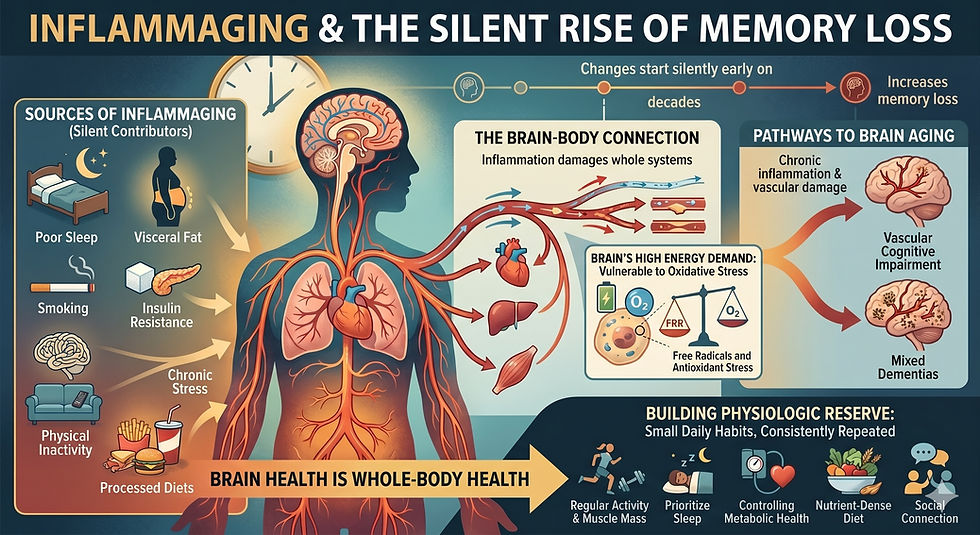
Most people think memory loss begins when someone starts forgetting names or misplacing keys. In reality, many of the biologic changes associated with brain aging often begin silently decades earlier.
One of those processes is chronic low-grade inflammation, sometimes referred to as “inflammaging.” While inflammation is an important part of the body’s natural defense system, persistent inflammation over time may contribute to changes in blood vessels, metabolism, energy production, and brain health as we age.
As a geriatrician and physician trained in Lifestyle Medicine, I often remind patients that the brain does not age separately from the rest of the body. The same systems that influence heart disease, diabetes, sleep quality, muscle health, and metabolic health can also influence cognitive aging over time.
That does not mean inflammation directly “causes” dementia. Dementia is complex and influenced by many factors, including genetics, vascular health, sleep, hearing loss, physical activity, nutrition, social connection, and overall health over time. However, growing research suggests that chronic inflammation may play an important role in how the aging brain changes over time.
What Is Inflammation?
Inflammation itself is not bad. In fact, it is essential for survival.
When you cut your finger, develop an infection, or injure a muscle while exercising, your immune system activates inflammation to help repair tissue and protect the body. This is called acute inflammation, and it is usually temporary and protective.
The problem occurs when inflammation becomes chronic and stays activated for long periods of time.
Over time, factors such as poor sleep, excess visceral fat, smoking, insulin resistance, chronic stress, physical inactivity, highly processed diets, and chronic medical conditions may contribute to a persistent low-grade inflammatory state.
Researchers sometimes refer to this process as inflammaging, meaning the slow accumulation of chronic inflammation associated with aging.
Unlike acute inflammation, chronic inflammation is often silent. Many people do not “feel inflamed,” yet inflammatory pathways may still be active beneath the surface for years.
Why the Brain May Be Vulnerable
The brain is one of the most energy-demanding organs in the body. Although it makes up only a small percentage of body weight, it uses a tremendous amount of oxygen and energy every day.
Because of this high energy demand, the brain may be particularly vulnerable to oxidative stress.
Oxidative stress happens when unstable molecules called free radicals build up faster than the body can clear them. Over time, this may gradually damage cells and tissues.
The brain may be especially sensitive to this process because it relies heavily on healthy blood flow, oxygen delivery, and efficient energy production.
Researchers continue to study how oxidative stress and chronic inflammation may interact with neurodegenerative diseases such as Alzheimer’s disease and other forms of cognitive decline.
The Connection Between Blood Vessels and Brain Health
One of the most important concepts in brain aging is that what affects the blood vessels often affects the brain.
The brain depends on healthy circulation to deliver oxygen and nutrients. Conditions such as high blood pressure, diabetes, smoking, obesity, high cholesterol, and insulin resistance may gradually damage blood vessels over time, including the very small blood vessels that supply the brain.
This is one reason cardiovascular health and brain health are deeply interconnected.
Over time, chronic inflammation may damage blood vessels, contribute to plaque buildup, and reduce healthy blood flow throughout the body, including the brain. Over decades, these changes may increase the risk of stroke, vascular cognitive impairment, and mixed dementias.
Many people think of Alzheimer’s disease and vascular disease as completely separate conditions. In reality, they often overlap.
Insulin Resistance and Brain Health
Insulin resistance does not only affect blood sugar.
When the body becomes less responsive to insulin, problems with how the body processes and uses energy can develop throughout multiple organ systems.
Researchers continue to investigate how insulin resistance may influence inflammation, blood vessel health, and signaling pathways within the brain itself.
Visceral fat, the fat surrounding internal organs, is also biologically active tissue. It releases inflammatory chemicals and hormones that may contribute to chronic inflammation over time.
This is one reason Lifestyle Medicine focuses not simply on weight itself, but on overall metabolic health, muscle health, movement, nutrition, sleep, and long-term physiologic reserve.
Sleep and the Aging Brain
Sleep is another important piece of the puzzle.
During sleep, the brain undergoes important restorative processes. Research suggests that poor sleep may influence inflammation, oxidative stress, insulin resistance, and blood vessel health. Sleep disorders such as obstructive sleep apnea may further increase stress on the body and brain.
Many people underestimate how closely sleep and cognition are connected.
As we age, sleep changes naturally. However, chronic sleep deprivation, fragmented sleep, untreated sleep apnea, excess alcohol use, and chronic stress may all contribute to increased inflammatory burden over time.
The Bigger Picture
One of the challenges in medicine is that we often separate the body into individual diseases and organ systems. But aging does not happen in isolated compartments.
The body functions as an interconnected system.
The same chronic inflammatory processes associated with cardiovascular disease, frailty, sarcopenia, metabolic dysfunction, and vascular disease may also influence how the brain ages over time.
This does not mean people should panic over every inflammatory marker or search endlessly for supplements claiming to “fight inflammation.” Aging is complex, and there is no single intervention that guarantees prevention of cognitive decline.
However, many of the same lifestyle factors associated with healthier aging overall may also help reduce chronic inflammatory burden:
regular physical activity and resistance training
maintaining muscle mass
prioritizing sleep
controlling blood pressure and metabolic disease
avoiding smoking
reducing excess alcohol intake
managing chronic stress
maintaining social connection
eating a nutrient-dense dietary pattern rich in whole foods
None of these strategies are about perfection. They are about improving physiologic reserve and supporting healthier aging over time.
Final Thoughts
The aging brain is influenced by far more than genetics alone.
Chronic inflammation, oxidative stress, vascular health, metabolic dysfunction, sleep, physical activity, and lifestyle patterns may all interact together across decades. While researchers are still learning exactly how these systems influence cognitive decline, one thing is becoming increasingly clear: brain health is deeply connected to whole-body health.
Healthy aging is rarely about a single magic solution; it is the accumulation of small daily habits, consistently repeated over time, that support resilience, reserve, and long-term function.
Learn More About Brain and Cardiovascular Health
If you would like to learn more about reducing dementia risk and how inflammation affects the cardiovascular system, you may also enjoy:
Reducing Your Risk of Dementiahttps://www.geriacademy.com/post/reducing-your-risk-of-dementia
Inflammation, Oxidative Stress, and the Aging Cardiovascular Systemhttps://www.geriacademy.com/post/inflammation-oxidative-stress-and-the-aging-cardiovascular-system
Medical Disclaimer: This article is for educational and informational purposes only and should not be considered medical advice. It is not intended to diagnose, treat, cure, or prevent any disease. Always consult your physician or qualified healthcare professional regarding personal medical concerns, symptoms, medications, or treatment decisions.


Thanks for sharing this valuable information Dr. G.!